Every registered real estate project in India has a RERA number, and so does every registered agent. Buyers use it to check that a project is genuine before paying anything. For builders, brokers and channel partners it matters for a second reason: the law says the number has to appear in your advertising. This guide explains what a RERA number is, how to check one on your state’s RERA website, what the formats look like, and where you must show it when you market a project.
What is a RERA number?
A RERA number is the registration number a state Real Estate Regulatory Authority gives to a project or an agent under the Real Estate (Regulation and Development) Act, 2016. Each state and union territory runs its own authority and website, so the number is issued by the state where the project is located.
There are two kinds, and people often mix them up:
Type
Who gets it
What it proves
Project registration number
The promoter (developer) of a project
The project has been registered with the authority, and its plans, approvals, completion date and promoter details are on public record.
Agent registration number
A real estate agent, broker or channel partner
The agent is registered with that state’s authority and may facilitate the sale of registered projects there.
When someone says “RERA number” they usually mean the project number. But if you are a broker or CP, you need your own agent number too. We cover how to get one in our guide to becoming a channel partner in real estate.
Key idea: a RERA number is a pointer to a public record, not a quality certificate. It tells you that the project is on file, and where to read the file. What you find in that file is what matters.
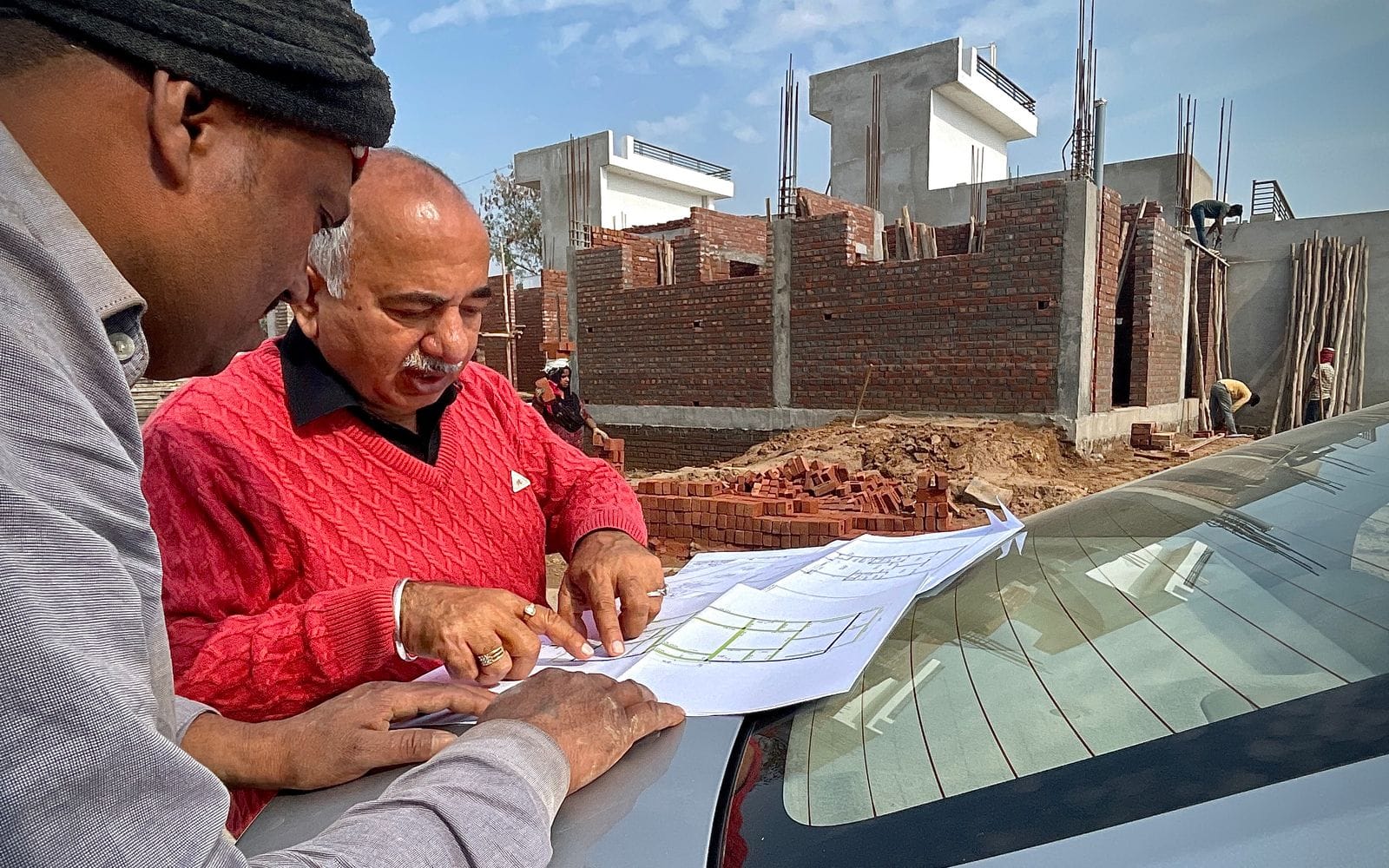
Every phase of a project above the size thresholds needs its own registration.
Is RERA registration mandatory?
For most projects, yes. Section 3 of the Act says a promoter cannot advertise, market, book, sell or offer to sell any plot, apartment or building in a real estate project without first registering it with the state authority. Section 3 also sets out the main exemptions: the land proposed to be developed doesn’t exceed 500 square metres, or the number of apartments doesn’t exceed eight, including all phases. A state can lower those thresholds, so check your state’s rules.
Some points that trip people up:
Plotted projects are covered. Selling plots in a layout is a real estate project under the Act, not only apartments.
Commercial projects are covered. Shops, offices and mixed-use projects need registration when they cross the thresholds, just like residential ones.
Each phase can be a separate project. The Act treats every phase as a standalone project for registration, so a phase 2 launch needs its own number.
Agents must register too. Section 9 requires agents to register before they facilitate the sale of any plot, apartment or building in a registered project.
So if a project is being advertised and you can’t find a RERA number anywhere, treat that as a warning sign, whether you’re a buyer or a CP deciding whether to take the project on.
RERA number format: what it looks like in different states
There is no single national format. Each state authority designs its own, and some have changed format over the years. As a rough guide, these are the patterns you will commonly see:
State
Typical project number pattern
Typical agent number pattern
Uttar Pradesh (UP RERA)
Starts with UPRERAPRJ followed by digits
Starts with UPRERAAGT followed by digits
Maharashtra (MahaRERA)
Starts with P followed by a long number
Starts with A followed by a long number
Delhi (Delhi RERA)
Includes DLRERA, the year and a P for project
Includes DLRERA, the year and an A for agent
Haryana (HRERA)
Registration numbers issued separately by the Gurugram and Panchkula authorities
Issued by the same authorities
Treat these as patterns, not rules. The only reliable test is to search for the number on the authority’s own website and confirm that the project name, promoter and location match what you were told. A number that “looks right” but doesn’t come up in the search is worthless.
The prefix is also a quick way to tell a project number from an agent number. If a broker gives you an agent number when you asked about the project, the project itself may still be unregistered.
Checking a RERA number takes a few minutes on the state authority’s website.
How to check a RERA number, step by step
Every state authority has a public search. The exact menu names differ, but the steps are almost always the same:
Find the right state website. The project is registered in the state where the land is. Search for the state name plus “RERA”, or start from the list of state authorities on the Ministry of Housing and Urban Affairs RERA portal. Make sure the address ends in .gov.in or .nic.in.
Open the registered projects search. It is usually labelled “Registered Projects”, “Project Search” or “Search Project”.
Search by registration number first. Type the number exactly as printed. If nothing comes up, try the project name or the promoter’s company name.
Open the project page. Check the promoter name, project name, address and registration validity against the brochure and the ad.
For an agent, use the registered agents search on the same website and match the name and number on their visiting card or WhatsApp profile.
If the search shows a different name, a different location, or an expired registration, stop and ask questions before any money changes hands. That applies to EOI payments too; our guide to what EOI means in real estate explains why money collected before registration is risky for both sides.
What to look at on the project’s RERA page
Most people stop at “yes, the number exists”. The project page holds much more, and it is worth ten minutes of reading:
Registration validity and declared completion date. The promoter declares a completion date when registering. If possession is being promised earlier than that date in the ads, ask why.
Sanctioned plans and approvals. The layout and building plans uploaded should match the floor plans in the brochure.
Carpet area of units. Under RERA, apartments are sold on carpet area. Compare it with any “super area” figures used in marketing.
Quarterly progress updates. Section 11 requires promoters to update the project’s page with construction status every quarter. Long gaps are a signal worth noticing.
The separate project bank account. Section 4(2)(l)(D) requires 70% of the amounts collected from buyers to go into a separate account and be used only for the land and construction costs of that project. This is the “70/30 rule” people ask about.
Complaints and orders. Many state sites let you see complaints filed against a project or promoter.
Registered agents for the project. Some states list the agents linked to a project, which helps a buyer check that the CP is genuine.
For a channel partner, this page is also your due diligence before you put your name to a project. The questions a buyer asks you on a site visit are usually answered here.
Hoardings are advertisements too: the RERA number and authority website belong on them.
Where builders and agents must show the RERA number
This is the part most marketing teams get wrong. Section 11(2) of the Act says that any advertisement or prospectus issued by the promoter must prominently mention the website address of the authority, where the details of the registered project can be found, and must include the registration number. State rules and authority orders add detail on top of this. Some authorities have also asked for a QR code linking to the project page. Maharashtra is the best-known example.
In practice, treat every piece of project marketing as an advertisement:
Where
What to include
Project landing page and website
Registration number and authority website near the top or beside the enquiry form, and again in the footer. Add the agent number if a CP runs the page.
Meta and Google ads
The number in the ad creative or text where space allows, and always on the page the ad sends people to.
Registration number and authority website in legible type, plus the QR code where your state requires it.
Social posts, Reels and WhatsApp creatives
The number on the creative itself, because images get forwarded without their captions.
Agent visiting cards and profiles
The agent’s own registration number.
A simple habit that prevents mistakes: put the RERA line into every design template once, so no creative can leave the studio without it. Our real estate ad examples show how to fit it in without cluttering the ad.
What happens if you don’t follow the rules
The penalties are set out in Sections 59 to 62 of the Act and are serious enough that no campaign is worth the risk:
Promoter who doesn’t register a project (Section 59): a penalty of up to 10% of the estimated project cost. If the promoter keeps ignoring orders, imprisonment of up to three years, a further fine of up to another 10%, or both.
Promoter who breaks other provisions (Section 61): a penalty of up to 5% of the estimated project cost. Leaving the registration number out of advertising falls under this kind of breach.
Agent who doesn’t register or breaks the agent rules (Section 62): a penalty of up to ₹10,000 for every day of default, which can go up to 5% of the cost of the plot, apartment or building being sold.
Beyond the penalties, ads for unregistered projects can be rejected, and buyers who later discover the problem lose trust in everyone involved, including the CP who brought them.
This article explains the law in general terms and is not legal advice. Rules and formats differ between states, so check your state RERA website or a lawyer for your specific project.
A RERA checklist for your next campaign
Before any project goes live in ads, run through this list:
The project’s registration is active, and the name, promoter and address on the RERA page match your creatives exactly.
The registration number and authority website appear on the landing page, near the form and in the footer.
Every creative template, including Reels covers and WhatsApp images, has the RERA line built in.
Carpet area is used in listings and brochures, and any other area figure is clearly labelled.
Possession dates in ads don’t run ahead of the completion date declared to RERA.
Every CP marketing the project has an active agent registration, and their number is on their own material.
The QR code is added wherever your state authority requires it.
Offers and EOI terms are written down and match what the ad says.
Getting this right also helps conversion. A buyer who sees a clear RERA number on the ad and can check it in thirty seconds has one less reason to hesitate. That is why we build it into every real estate landing page we make, next to the enquiry form, together with the other elements that make a project page convert.
If you want a second pair of eyes on your current ads, landing page and CP material, including the RERA details, ask for a free marketing audit.
Founder of Veloxis Global, with 4+ years in digital marketing. Works with builders, brokers and channel partners across Kanpur, Lucknow, Noida and Delhi NCR.
It is the registration number a state Real Estate Regulatory Authority gives to a project or an agent under the RERA Act, 2016. A project number shows the project is on public record; an agent number shows the agent is registered in that state.
How do I check a RERA number?
Go to the RERA website of the state where the project is located, open the registered projects search, and search by the registration number. Then check that the promoter, project name, address and registration validity match what you were told.
What does a RERA number look like?
There is no national format. UP RERA project numbers start with UPRERAPRJ and agent numbers with UPRERAAGT; MahaRERA project numbers start with P and agent numbers with A. The only reliable test is searching the number on the state authority’s website.
Is RERA registration mandatory for every project?
It is mandatory unless the land doesn’t exceed 500 square metres or the project has no more than eight apartments, including all phases. States can lower these thresholds. Plotted and commercial projects are covered too.
Where must a builder show the RERA number?
Section 11(2) of the Act requires every advertisement or prospectus to include the registration number and the authority’s website address. In practice that means landing pages, ads, brochures, hoardings, newspaper ads and social creatives.
What is the 70/30 rule in RERA?
Section 4(2)(l)(D) requires promoters to deposit 70% of the money collected from buyers in a separate bank account and use it only for the land and construction costs of that project.
Do real estate agents need a RERA number?
Yes. Section 9 of the Act requires agents to register with the state authority before they facilitate the sale of any plot, apartment or building in a registered project.
What is the penalty for not registering a project under RERA?
Under Section 59, a penalty of up to 10% of the estimated project cost. If the promoter keeps ignoring orders, imprisonment of up to three years, a further fine of up to 10%, or both.
Get a free real estate marketing audit
Send us your project or current campaigns. We’ll review your landing page, ads and lead follow-up and tell you what to fix first — no obligation.